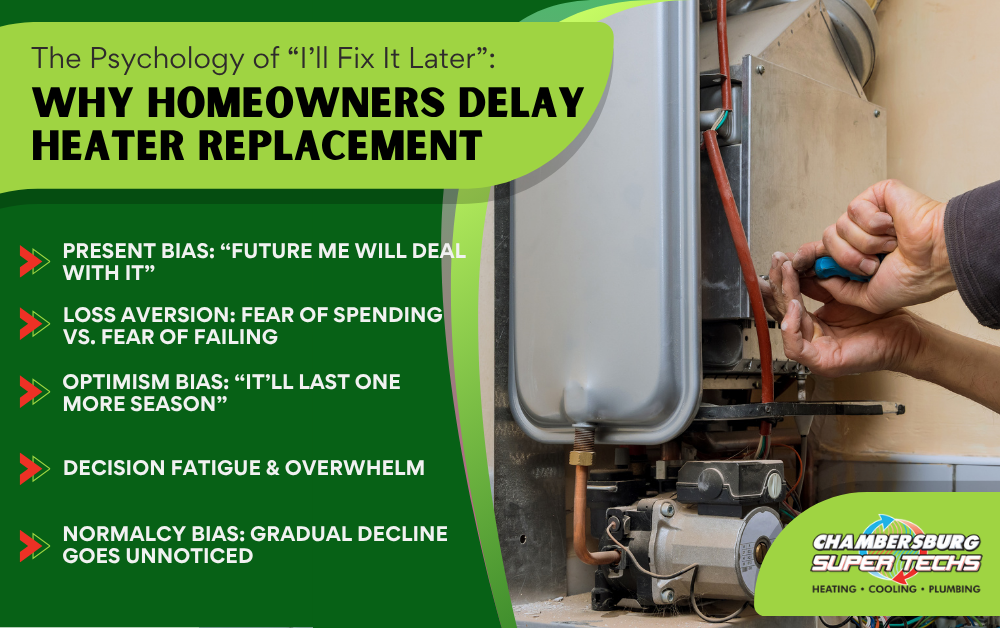
When it comes to home maintenance, few decisions are delayed more often than heater replacement. Even when systems show clear signs of aging or inefficiency, many homeowners continue to put off the inevitable. At Chambersburg Super Techs, this pattern is something professionals see all the time—systems pushed beyond their limits simply because the decision feels easy to delay. The reasoning behind this isn’t just financial or practical; it’s deeply psychological. Understanding these mental habits can help homeowners make smarter, more proactive choices. By recognizing what’s really driving hesitation, it becomes easier to take action before small issues turn into major problems.
Present Bias: “Future Me Will Deal With It”
The Comfort of the Present Moment
Homeowners naturally prioritize what feels urgent right now over what might happen later. If the heat is still turning on, even if it’s inconsistent or inefficient, the system doesn’t feel like an immediate problem. The discomfort of researching options, scheduling appointments, and spending money feels more real than a possible future breakdown. This creates a tendency to delay heater replacement until it becomes unavoidable. As long as the system provides some level of comfort, the brain categorizes it as “good enough.” Over time, this mindset reinforces itself and makes action feel less necessary.
The Illusion of Control
Many homeowners believe they can manage the situation by monitoring their heater closely. They may tell themselves they will notice when things get worse and act at that point. This creates a false sense of control over something that can fail unpredictably. In reality, heating systems often break down suddenly, especially under heavy winter demand. The idea of being able to time a replacement perfectly is comforting but unrealistic. This illusion allows procrastination to continue without triggering urgency.
The Cost of Delay
Delaying heater replacement often leads to higher long-term costs, even if it feels like saving money in the moment. Older systems lose efficiency, causing energy bills to rise steadily over time. Small repairs begin to add up, creating a cycle of temporary fixes instead of a permanent solution. When the system finally fails, it often happens during peak season when replacement costs and wait times are highest. What seemed like a manageable delay turns into a stressful and expensive emergency. Present bias makes it easy to ignore these future consequences until they become unavoidable.
Loss Aversion: Fear of Spending vs. Fear of Failing
The Pain of Upfront Costs
Spending a significant amount of money on heater replacement feels like a loss, even when it’s a necessary investment. Homeowners often focus on the immediate financial impact rather than the long-term benefits. This emotional response can outweigh logical reasoning about efficiency and reliability. Even when repair costs start approaching replacement costs, the idea of a large upfront payment feels harder to accept. This leads many to continue repairing an aging system instead of replacing it. The fear of spending becomes stronger than the risk of system failure.
Minimizing the Risk of Breakdown
While the cost of replacement is clear and immediate, the risk of a heater failing feels uncertain and distant. Homeowners may downplay warning signs or assume the system will continue functioning. This imbalance in perception makes it easier to justify postponing the decision. The brain treats certain losses more seriously than potential ones, even if the potential loss is larger. As a result, heater replacement is framed as optional rather than necessary. This mindset delays action until the risk becomes reality.
Emotional Decision-Making
Financial decisions around home systems are rarely purely logical. Emotions play a significant role in how homeowners evaluate their options. The idea of spending money on something that isn’t visibly broken can feel frustrating or unnecessary. This emotional resistance can override practical considerations like energy savings and reliability. Over time, this leads to a pattern of reactive rather than proactive decisions. Heater replacement becomes something people do only when they feel forced to.
Optimism Bias: “It’ll Last One More Season”
Overestimating System Lifespan
Many homeowners believe their heater will last longer than it realistically will. Even when systems are well past their expected lifespan, there is a tendency to assume they will keep running. This optimism bias creates a false sense of security. Each successful heating season reinforces the belief that the system still has life left. However, aging systems become increasingly unpredictable over time. This overconfidence often leads to being caught off guard by sudden failure.
Ignoring Warning Signs
Subtle issues like uneven heating, strange noises, or rising energy bills are often dismissed as minor inconveniences. Homeowners may rationalize these signs instead of seeing them as indicators of a larger problem. This selective attention allows optimism bias to persist. By focusing only on the fact that the heater still works, people ignore evidence that it is declining. This delays heater replacement even when the need is clear. Eventually, these warning signs escalate into major failures.
The Risk of Emergency Replacement
Waiting for a system to fail completely often results in rushed decision-making. Emergency heater replacement typically happens during the coldest months, when demand is highest. This can limit options and increase costs significantly. Homeowners may have less time to research or compare systems, leading to less optimal choices. The stress of being without heat adds pressure to act quickly. What could have been a planned upgrade becomes a reactive situation.
Decision Fatigue & Overwhelm
Too Many Choices
Heater replacement involves a wide range of decisions, from system types to efficiency ratings and installation options. For many homeowners, this level of complexity feels overwhelming. Instead of breaking the process into manageable steps, it becomes a single, daunting task. This leads to avoidance rather than action. When faced with too many options, people often default to doing nothing. The complexity itself becomes a barrier to progress.
The Mental Load of Research
Researching heating systems requires time and effort, which many homeowners struggle to prioritize. Between work, family, and other responsibilities, it’s easy to push this task aside. The mental energy required to compare options and understand technical details can feel exhausting. This contributes to decision fatigue, where making any choice feels difficult. As a result, heater replacement is delayed simply because it requires too much thought. The longer it’s postponed, the more overwhelming it can feel.
Avoidance as a Coping Mechanism
Avoidance is a natural response to overwhelming decisions. By not thinking about heater replacement, homeowners temporarily reduce stress. However, this relief is short-lived and often leads to bigger problems later. The issue doesn’t go away; it simply becomes more urgent over time. Avoidance can create a cycle where the decision feels increasingly difficult. Breaking this cycle requires acknowledging the problem and taking small steps toward a solution.
Normalcy Bias: Gradual Decline Goes Unnoticed
Adapting to Small Changes
Heating systems rarely fail all at once; instead, they decline gradually. Homeowners adapt to these changes without realizing it. Slight increases in energy bills or minor temperature inconsistencies become the new normal. Because the changes are subtle, they don’t trigger immediate concern. This makes it easy to overlook the need for heater replacement. Over time, these small issues accumulate into significant inefficiencies.
Redefining “Normal”
As a system ages, homeowners may adjust their expectations without realizing it. Rooms that stay below the intended temperature or systems that run longer cycles become accepted as normal. This shift in perception reduces the urgency to take action. What would have been seen as a problem years ago is now considered typical. This normalization delays necessary upgrades. It creates a false sense that everything is functioning as it should.
The Danger of Waiting Too Long
Normalcy bias can lead homeowners to wait until their heater stops working entirely. By that point, the situation is no longer manageable or convenient. Emergency replacements usually come with increased costs and limited availability. The lack of preparation can add unnecessary stress to an already difficult situation. Addressing the issue earlier allows for better planning and more options. Recognizing gradual decline is key to avoiding these outcomes.
Conclusion
The decision to delay heater replacement is rarely just about money or timing; it’s shaped by deeply ingrained psychological patterns. From present bias to optimism and decision fatigue, these mental habits make it easy to postpone action even when the signs are clear. Understanding these behaviors can help homeowners shift from reactive decisions to proactive planning. At Chambersburg Super Techs, helping homeowners recognize these patterns is an important part of preventing costly and stressful emergencies. If your system is showing signs of age or inefficiency, now is the time to take control of the situation.
Contact Chambersburg Super Techs today to schedule an evaluation and make a confident, informed decision about your heater replacement.