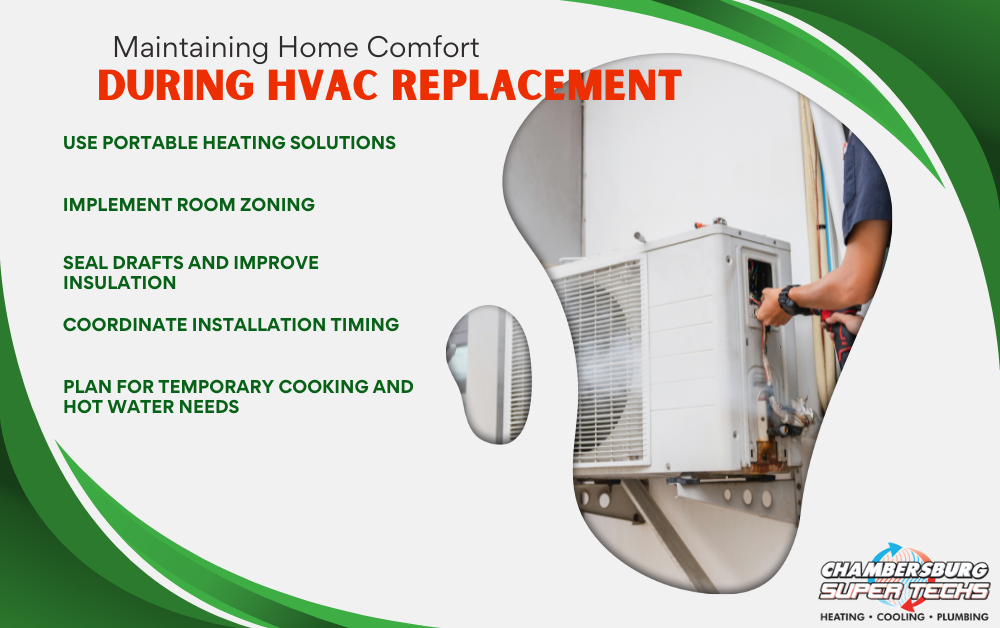
Replacing your HVAC system during winter can feel overwhelming, especially when keeping your home comfortable is a top priority. Chambersburg Super Techs understands the challenges homeowners face when the heating system is offline and cold weather sets in. With thoughtful planning, temporary solutions, and strategic steps, it is possible to maintain warmth and functionality throughout the replacement process. Homeowners can take proactive measures to minimize disruption, manage daily routines, and ensure safety. From portable heating to room zoning and draft control, small actions make a significant difference. Planning can turn what seems like a stressful project into a manageable and efficient process.
Use Portable Heating Solutions
Targeted Room Warmth
Portable electric heaters and space heaters are ideal for keeping specific rooms warm while your central system is being replaced. Placing these units in bedrooms, living areas, or home offices ensures that family members remain comfortable even when the HVAC is offline. Portable heaters allow you to maintain targeted heat without wasting energy on unoccupied spaces. Choosing heaters with adjustable thermostats helps regulate temperature precisely and efficiently. Combining several small heaters can distribute warmth more evenly across frequently used areas. Proper placement of these units ensures that your home remains functional and cozy during the replacement.
Safety Precautions
It is essential to use portable heaters safely to avoid accidents or fire hazards. Keep a clear, safe perimeter around heaters, free from curtains, blankets, or other fire-prone materials. Never leave units unattended for long periods, especially overnight. Ensure that the devices are on stable, flat surfaces to prevent tipping or overheating. Checking for safety certifications and following the manufacturer’s instructions further reduces risks. By combining warmth and safety, portable solutions give homeowners peace of mind.
Supplemental Comfort
In addition to space heaters, small infrared or ceramic units can provide rapid heat to colder areas. These supplemental heaters are energy-efficient and help maintain a consistent temperature throughout your home. They are instrumental in rooms where people spend the most time, such as kitchens or home offices. Using multiple units in tandem can create balanced warmth without overloading electrical circuits. This approach allows your household to function normally despite a temporarily offline HVAC system. Supplemental heating ensures comfort and reduces stress during replacement projects.
Implement Room Zoning
Focus on High-Traffic Areas
Closing doors to unused rooms allows you to concentrate heat where it is needed most. This simple strategy prevents unnecessary heat loss and keeps your most frequented areas warm and comfortable. Prioritizing high-traffic rooms ensures that family members experience minimal disruption during the replacement process. Room zoning also helps maintain energy efficiency, reducing the strain on portable heaters. By planning which spaces require heat and which can remain cooler, you maximize comfort without wasting energy. Focused heating keeps daily routines manageable and helps maintain a typical living environment.
Reduce Energy Waste
Selective heating through room zoning ensures that portable or supplemental heating is used efficiently. By only warming occupied spaces, energy costs remain under control even with temporary solutions in place. It also prevents overworking heating devices, which can extend their lifespan and maintain performance. Effective zoning reduces the risk of cold spots in the home, keeping temperatures more consistent. Homeowners can pair this strategy with draft control to further enhance indoor comfort. This thoughtful approach combines practicality with energy savings.
Strategic Comfort Planning
Coordinating your daily activities around warm zones makes living during HVAC replacement more comfortable. Planning meals, work, or leisure time in heated areas reduces exposure to cold spots. Portable heaters and closed doors work together to create a consistent environment in the rooms that matter most. Combining zoning with temporary heating ensures that comfort is maintained throughout the day. This strategy also helps families adapt quickly to a temporary reduction in home heating. With proper planning, daily life can continue smoothly despite HVAC system downtime.
Seal Drafts and Improve Insulation
Temporary Weatherproofing
Applying temporary weatherstripping to doors and windows is an effective way to block cold drafts during HVAC replacement. Sealing these gaps prevents heat from escaping and improves the efficiency of portable heaters. Even short-term weatherproofing measures can significantly impact indoor comfort. Temporary insulation also helps reduce energy costs while the system is offline. It provides a more stable indoor temperature, making the replacement process less disruptive. Homeowners can implement these measures quickly and at minimal cost.
Use Heavy Curtains and Blankets
Draping heavy curtains or blankets over windows and doors adds another layer of protection against cold air. These barriers help trap warmth inside rooms and keep drafts from making spaces uncomfortable. Heavy fabrics work particularly well in frequently used areas, improving the effectiveness of supplemental heating. They also provide a sense of coziness and protection while the home is partially exposed due to HVAC work. When combined with weatherstripping, these simple solutions dramatically enhance indoor comfort. Proper coverage ensures that rooms stay warmer and more inviting during installation.
Maintain Interior Warmth
Maintaining indoor warmth during HVAC replacement is essential for both comfort and safety. Draft reduction and insulation strategies work in tandem with portable heating to preserve steady temperatures. This approach also ensures that materials like adhesives, paints, or finishes used in other areas of the home are not affected by extreme cold. Keeping rooms warm reduces stress and allows daily activities to continue without interruption. The combination of heat retention and temporary insulation maximizes home comfort during replacement. It also provides homeowners with peace of mind while the system is offline.
Coordinate Installation Timing
Choose Low-Activity Periods
Scheduling the HVAC replacement during low-activity periods helps minimize disruption to household routines. Choosing daytime hours when the home is less occupied ensures that noise and construction activities are less intrusive. Low-activity periods also allow contractors to work more efficiently and safely. Planning installation around your family’s schedule reduces stress and creates a smoother experience. Coordinating timing in advance ensures that all parties understand expectations and project milestones. Proper scheduling keeps the replacement process organized and less disruptive.
Communicate with Your Contractor
Clear communication with your HVAC contractor is key to a successful replacement. Discussing the project timeline, noisy tasks, and estimated duration allows homeowners to plan around construction activities. Open communication also enables the contractor to prepare for unexpected challenges and schedule work efficiently. Understanding when and where work will occur helps reduce confusion and improve safety. It allows the household to adjust routines to maintain comfort despite system downtime. A well-communicated plan ensures the project stays on track and minimizes inconvenience.
Optimize Home Functionality
Even during HVAC replacement, daily routines can continue with careful planning. Coordinating room usage, heating, and access to utilities keeps life functional throughout the project. Maintaining functional spaces reduces stress for both residents and contractors. Thoughtful planning ensures that temporary discomfort is manageable. Homeowners can combine timing, zoning, and supplemental heating strategies for optimal comfort. Efficient project management makes the experience less stressful and more productive.
Plan for Temporary Cooking and Hot Water Needs
Alternative Cooking Solutions
Some HVAC systems can affect hot water or venting during replacement. Using microwaves, slow cookers, or portable induction cooktops provides convenient meal preparation without relying on the central system. These temporary solutions ensure that daily routines, such as cooking family meals, continue uninterrupted. Having multiple small appliances available allows flexibility and reduces pressure on household members. Planning for alternative cooking helps maintain comfort and normalcy during the installation.
Ensure Hot Water Access
Maintaining hot water availability is critical during HVAC replacement. Filling kettles, pots, or insulated containers with hot water ensures that bathing, cleaning, or other daily tasks can continue smoothly. This step reduces the inconvenience caused by limited access to hot water. It also supports household safety and hygiene while the central system is offline. Homeowners can combine alternative water heating with temporary cooking solutions for maximum convenience. Proactive preparation ensures that essential needs are met without disruption.
Reduce Stress During Replacement
By planning for temporary cooking and water needs, homeowners can reduce stress and maintain a comfortable home environment. These measures complement supplemental heating, zoning, and insulation strategies. Together, they create a coordinated approach that ensures safety, warmth, and functionality. Minimizing disruption keeps daily routines intact and prevents unnecessary stress for residents. This comprehensive preparation allows families to focus on enjoying their upgraded HVAC system once installation is complete. The proper planning makes winter HVAC replacement more manageable and efficient.
Conclusion
Replacing your HVAC system in winter doesn’t have to disrupt your home life. By using portable heating, implementing room zoning, sealing drafts, coordinating installation timing, and planning for temporary cooking and hot water needs, homeowners can stay warm, safe, and comfortable throughout the process. Chambersburg Super Techs provides expert HVAC replacement services and guidance to ensure your home remains functional and inviting from start to finish.
Contact Chambersburg Super Techs today to schedule your HVAC replacement and maintain comfort in your home, no matter the season.