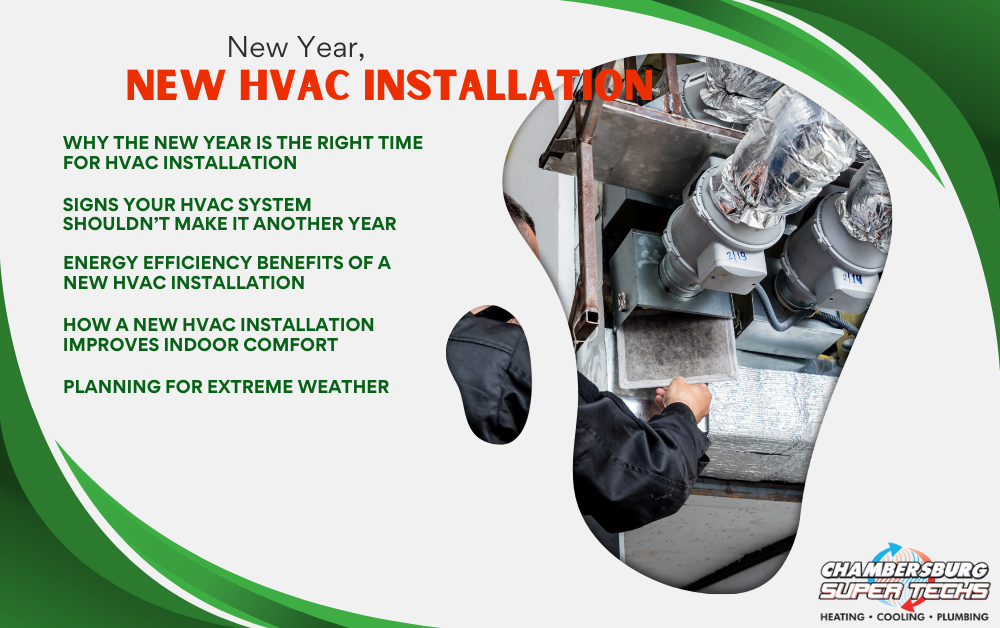
A new year presents the perfect opportunity for homeowners to take a proactive approach to improving home comfort, energy efficiency, and long-term system reliability. At Chambersburg Super Techs, homeowners are encouraged to start the year by addressing aging heating and cooling equipment before unexpected problems arise. HVAC installation should always be viewed as a forward-thinking investment rather than a reaction to an inconvenient system failure. Waiting until a system breaks down often results in rushed decisions, limited options, and unnecessary disruption to daily life. Planning at the start of the year allows homeowners to move forward with confidence, preparation, and dependable comfort.
Why the New Year Is the Right Time for HVAC Installation
Avoiding Peak-Season Emergencies
Replacing an aging HVAC system early in the year significantly reduces the likelihood of emergency breakdowns during peak heating and cooling seasons. HVAC systems experience the most significant stress during extreme summer heat and prolonged winter cold, when demand is at its highest. A system failure during these periods often leads to uncomfortable indoor conditions and limited scheduling availability. Completing HVAC installation ahead of peak demand minimizes risk and eliminates last-minute pressure. This proactive timing ensures reliable comfort when homeowners need it most.
Better Scheduling Availability
The beginning of the year typically offers greater flexibility in scheduling an HVAC installation than during busier seasonal periods. Contractors are often more available, which allows homeowners to select installation dates that best fit their personal schedules. Adequate availability also provides for more detailed planning and proper system sizing. HVAC installation without time constraints yields higher-quality results. Better scheduling ultimately contributes to smoother installation and improved long-term system performance.
Proactive Home Planning
Starting the year with HVAC installation supports a more organized and intentional approach to home maintenance planning. Homeowners can carefully evaluate system options without the stress of an urgent breakdown. Early planning reduces the risk of unexpected expenses later in the year. HVAC installation becomes a well-informed, controlled decision rather than a forced replacement. This proactive mindset results in stronger performance and long-term peace of mind.
Signs Your HVAC System Shouldn’t Make It Another Year
Rising Energy Bills
Steadily rising energy bills are often a clear indication that an HVAC system is losing efficiency. Older systems require significantly more energy to maintain consistent indoor temperatures. This inefficiency results in higher monthly costs without providing better comfort. HVAC installation replaces outdated equipment with modern, energy-efficient technology. Addressing energy waste early prevents continued financial strain.
Uneven Heating or Cooling
Uneven temperatures throughout the home are a common sign that an HVAC system is no longer performing properly. Certain rooms may feel consistently warmer or cooler than others, regardless of thermostat settings. These comfort issues tend to worsen over time when left unresolved. HVAC installation restores balanced airflow and consistent temperature control throughout the home. Improved comfort is immediate and noticeable after replacement.
Frequent Repairs and System Age
Frequent repair calls are a strong indication that an HVAC system is reaching the end of its useful lifespan. As systems age, components wear down and fail more often. Repair costs typically increase as breakdowns become more frequent. HVAC installation eliminates the ongoing cycle of repairs and temporary fixes. Replacement becomes a strategic and cost-effective decision rather than a last-minute emergency.
Energy Efficiency Benefits of a New HVAC Installation
Reduced Energy Consumption
Modern HVAC systems are engineered to operate with significantly higher efficiency than older models. Advanced technology allows these systems to deliver consistent comfort while using less energy. Lower energy consumption translates directly into reduced monthly utility bills. HVAC installation aligns the home with current efficiency standards and expectations. Over time, these savings make replacement a practical financial decision.
Improved Airflow Performance
New HVAC systems are designed to deliver consistent and efficient airflow throughout the entire home. Older systems often struggle due to worn components or airflow restrictions. Poor circulation reduces both comfort and system efficiency. HVAC installation resolves airflow challenges that limit performance. Improved circulation supports even temperatures in every room.
Consistent Indoor Temperatures
Modern HVAC installations provide reliable, precise temperature control year-round. Advanced system controls allow equipment to respond quickly to changing indoor conditions. This responsiveness reduces temperature swings and eliminates the need for constant thermostat adjustments. Stable indoor temperatures significantly improve overall comfort. Reliable performance contributes to long-term homeowner satisfaction.
How a New HVAC Installation Improves Indoor Comfort
Enhanced Temperature Control
A new HVAC system delivers accurate and responsive temperature regulation tailored to household needs. Modern equipment adjusts efficiently to maintain desired comfort levels. This results in consistent temperatures throughout the day and night. HVAC installation ensures dependable performance across all seasons. Improved control enhances everyday comfort and convenience.
Quieter Operation
As HVAC systems age, they often become noticeably louder during operation. New systems are specifically designed to operate with reduced noise levels. Quieter performance improves the overall indoor environment. HVAC installation eliminates disruptive sounds associated with worn equipment. Reduced noise contributes to a more peaceful home.
Improved Humidity Balance
Modern HVAC systems are better equipped to manage indoor humidity levels effectively. Proper humidity control prevents indoor air from feeling excessively dry or uncomfortably damp. Balanced humidity improves comfort and supports healthier indoor air conditions. HVAC installation helps maintain ideal humidity levels year-round. These improvements are especially noticeable during extreme weather conditions.
Planning for Extreme Weather
Summer Heat Preparedness
Installing a new HVAC system early in the year prepares the home for intense summer heat. Older systems are more likely to fail under heavy cooling demand. HVAC installation before summer reduces the risk of unexpected breakdowns. Reliable cooling ensures comfort during heat waves. Preparation eliminates unnecessary stress.
Winter Cold Reliability
Cold winter temperatures place significant strain on heating systems. Aging equipment may struggle to maintain consistent warmth during extended cold spells. HVAC installation ensures dependable heating performance throughout winter. Reliable systems protect comfort and safety. Early replacement prevents emergency heating failures.
Peace of Mind Year-Round
A new HVAC system provides consistent performance regardless of seasonal conditions. Homeowners no longer have to worry about sudden breakdowns or unreliable operation. HVAC installation removes the uncertainty caused by extreme weather events. Consistent performance supports long-term comfort. Peace of mind is one of the most significant benefits of proactive replacement.
Budgeting Smart: HVAC Installation as a Long-Term Investment
Predictable Costs
Planned HVAC installation allows homeowners to budget accurately and confidently. Emergency replacements often involve rushed decisions and higher overall costs. Early planning provides clear pricing expectations. Predictable expenses support better financial planning. This approach reduces unexpected financial strain.
Fewer Repair Expenses
New HVAC systems require significantly fewer repairs compared to aging units. Modern equipment is built for improved durability and efficiency. HVAC installation eliminates frequent service calls and repair costs. Reduced maintenance expenses accumulate over time. Long-term savings strengthen the value of replacement.
Extended System Lifespan
A properly installed HVAC system is designed to last longer and perform more efficiently. Starting with new equipment ensures optimal operation from the beginning. HVAC installation reduces stress on system components. A longer lifespan delays future replacement needs. This makes installation a sound long-term investment.
Conclusion
Beginning the year with HVAC installation is a confident and strategic decision for homeowners who value comfort and reliability. Proactive replacement improves energy efficiency, indoor comfort, and system dependability. Chambersburg Super Techs helps homeowners make informed choices that protect their homes and long-term budgets.
A new HVAC system eliminates uncertainty and reduces future repair costs. Contact Chambersburg Super Techs today to schedule your HVAC installation and start the year with reliable comfort and complete peace of mind.