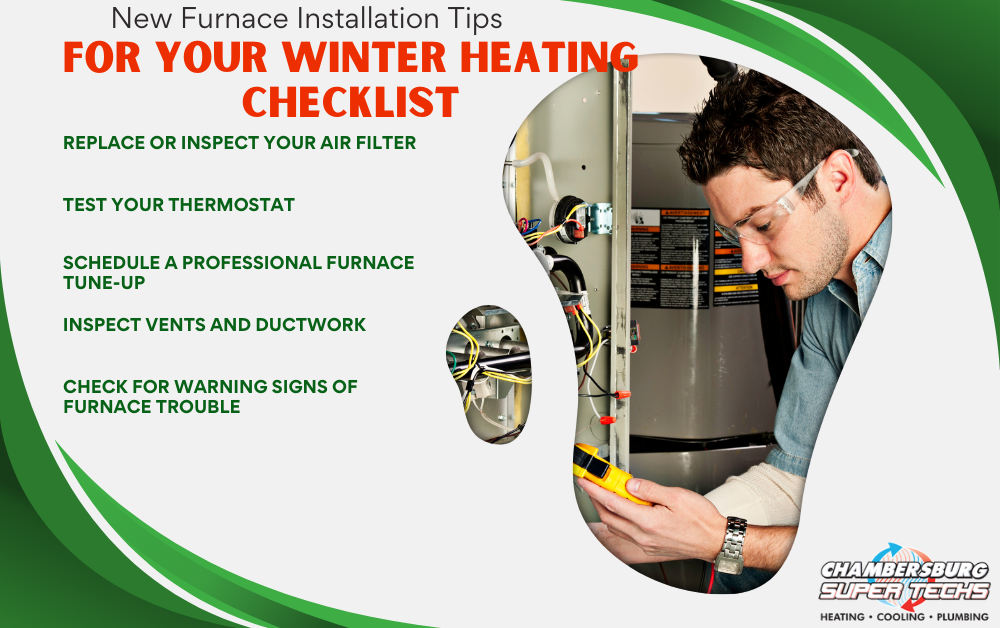
Winter is not the time for uncertainty with your heating system. Your furnace must operate safely, efficiently, and reliably every day. Proactive preparation eliminates avoidable breakdowns and costly emergency repairs. At Chambersburg Super Techs, we emphasize preparation because reliable heat is essential in freezing temperatures. Whether your current system needs maintenance or you are evaluating a new furnace installation, a structured winter checklist is essential.
Replace or Inspect Your Air Filter
Understand the Impact of Restricted Airflow
A clogged air filter directly restricts airflow, forcing your furnace to work harder to circulate heated air. That added strain reduces efficiency and accelerates wear on critical components. During winter, when run times increase, restricted airflow can quickly lead to overheating or system shutdowns. Clean airflow is fundamental to performance. Ignoring filter maintenance compromises both comfort and equipment longevity.
Commit to Consistent Filter Inspections
Before winter begins, inspect your air filter and replace it if it shows visible buildup. In most homes, filters should be replaced every month or every 3 months, depending on system usage, pets, and indoor air quality. Waiting until performance declines is not a strategy; it is a risk. Routine inspection ensures uninterrupted heating during peak demand. A disciplined maintenance schedule prevents avoidable service calls.
Improve Efficiency and Indoor Air Quality
A clean filter supports proper airflow, lowers system strain, and stabilizes energy consumption. It also traps dust, allergens, and debris that would otherwise circulate through your home. During winter, when windows remain closed, indoor air quality becomes even more important. Lower utility bills and healthier indoor air begin with this simple step. Preventative action always outperforms reactive repair.
Test Your Thermostat
Verify Heating Activation
Your thermostat controls every heating cycle. Before cold weather sets in, switch the system to heating mode and raise the temperature a few degrees above room level. The furnace should respond promptly and smoothly. Delayed activation or no response indicates a problem that must be addressed immediately. Confirming proper operation now prevents mid-season frustration.
To properly verify operation:
- Set the thermostat at least 3–5 degrees above room temperature
- Listen for the furnace to initiate within a minute.
- Confirm warm air begins flowing from the supply vents.
- Observe that the system runs steadily without abrupt shutdowns.
Identify Calibration or Communication Issues
Inconsistent indoor temperatures often trace back to thermostat inaccuracies. If your furnace cycles too frequently or struggles to maintain the set temperature, the thermostat may require recalibration or replacement. Precise communication between thermostat and furnace is critical. Allowing inaccuracies to persist increases wear and energy costs. Accurate temperature control protects both comfort and efficiency.
Warning signs of thermostat issues include:
- Noticeable temperature differences between rooms
- Frequent short cycling
- The displayed temperature does not match the room’s actual temperature.
- Delayed response after adjusting settings
Upgrade for Smarter Performance
Modern smart thermostats deliver measurable efficiency improvements. They optimize schedules, reduce unnecessary run times, and provide remote access for better control. Integrating advanced controls with your heating system enhances overall performance. When paired with a high-efficiency unit or a new furnace installation, the results are even more significant. Strategic upgrades produce long-term savings and improved reliability.
Key benefits of upgrading include:
- Programmable heating schedules tailored to your routine
- Remote access through smartphone apps
- Energy usage tracking and performance insights
- Improved compatibility with high-efficiency systems
Schedule a Professional Furnace Tune-Up
Prioritize Safety and Compliance
A professional tune-up is not optional maintenance; it is a safety measure. Technicians inspect burners, heat exchangers, electrical systems, and ventilation components to confirm proper operation. Gas furnaces, in particular, demand careful evaluation to prevent combustion-related risks. Comprehensive inspection ensures the system meets operational and safety standards. Confidence in your furnace begins with professional oversight.
Prevent Peak-Season Failures
Minor mechanical issues escalate quickly under continuous winter demand. A pre-season tune-up identifies worn components before they fail. Addressing small problems early prevents emergency breakdowns during the coldest days of the year. Strategic maintenance reduces unexpected downtime and costly repairs. Scheduling service before peak winter demand also guarantees faster availability.
Protect Equipment Lifespan and Investment
Annual maintenance extends system life and preserves manufacturer warranties. Neglect shortens operational lifespan and accelerates replacement timelines. While consistent service may delay the need for a new furnace installation, aging or inefficient systems may warrant an evaluation for replacement. Professional assessment provides clear direction. Protecting your heating investment requires consistent, documented care.
Inspect Vents and Ductwork
Eliminate Airflow Obstructions
Closed or blocked vents restrict heat distribution and increase furnace strain. Every supply and return vent must remain open and unobstructed. Furniture, rugs, and storage items frequently compromise airflow without homeowners realizing it. Balanced circulation ensures consistent room temperatures. Proper airflow reduces system stress and improves efficiency.
To eliminate airflow restrictions:
- Confirm all supply and return vents are fully open
- Move furniture or rugs that cover vent openings.
- Remove dust buildup from the vent cover.s
- Ensure interior doors are open to promote balanced airflow.
Address Leaks and Structural Damage
Damaged or poorly sealed ducts can waste heated air before it circulates through your home. This waste increases energy consumption and reduces comfort. Visible duct connections should be inspected for separation or deterioration. Professional evaluation can identify hidden leaks within concealed duct systems. Sealing deficiencies enhances performance and lowers operating costs.
Signs your ductwork may need attention include:
- Uneven heating between rooms
- Excessive dust accumulation in the home
- Whistling or rattling sounds from ducts
- Higher-than-normal winter energy bills
Strengthen Overall System Efficiency
When ductwork performs correctly, your furnace operates within optimal parameters—reduced heat loss results in steadier indoor temperatures and lower utility costs. Efficient air delivery minimizes unnecessary cycling and mechanical wear. Strategic duct improvements support long-term system reliability. Strong airflow management is fundamental to winter readiness.
Efficiency-focused improvements may include:
- Professional duct sealing to eliminate air leaks
- Insulating exposed duct sections in attics or basements
- Upgrading undersized or damaged duct runs.
- Conducting airflow balancing adjustments for consistent performance
Check for Warning Signs of Furnace Trouble
Take Unusual Sounds and Odors Seriously
Banging, rattling, or persistent squealing are not harmless noises. They indicate mechanical issues that require immediate evaluation. Burning smells or gas-like odors require immediate attention and a professional inspection. Early intervention prevents escalation into major repairs. Vigilance protects both safety and equipment.
Monitor Performance and Energy Usage
Inconsistent heating, short cycling, or unexplained increases in energy bills signal declining efficiency. A yellow pilot flame in a gas furnace, rather than a stable blue flame, may indicate combustion issues. Difficulty starting or repeated shutdowns are additional warning signs. These symptoms should never be dismissed. Prompt service prevents system failure during critical winter periods.
Act Before Replacement Becomes Urgent
Persistent repairs and declining performance often indicate a system nearing the end of its service life. In these cases, a new furnace installation may offer greater reliability and improved efficiency. Waiting for complete failure limits options and increases stress. Strategic replacement planning provides control and cost predictability. Decisive action ensures uninterrupted winter comfort.
Take Control of Your Winter Comfort
Winter heating preparation demands discipline and professional oversight. Replacing filters, verifying thermostat accuracy, scheduling maintenance, inspecting ductwork, and addressing warning signs are non-negotiable steps for reliable performance. If your system shows signs of inefficiency or repeated breakdowns, evaluating a new furnace installation is a proactive investment in long-term comfort.
Chambersburg Super Techs delivers the expertise and precision your home requires. Contact Chambersburg Super Techs today to schedule your professional winter furnace inspection and secure dependable heat all season long.