Your heating and cooling system is one of the most important parts of your home. It keeps your indoor environment comfortable through every season while also helping maintain healthy air quality and energy efficiency. However, no HVAC system lasts forever. As systems age, wear and tear naturally reduce efficiency and performance, increase repair costs, and make it harder to maintain reliable comfort. When these problems become frequent, homeowners often begin considering an HVAC system replacement as a long-term solution.
Many homeowners delay replacing their HVAC system because they hope repairs will continue solving the problem. While repairs can help temporarily, there comes a point when replacement becomes the smarter financial and practical decision. A modern HVAC system can improve comfort, lower utility bills, increase energy efficiency, and reduce the stress of ongoing breakdowns. Chambersburg Super Techs can help you understand the warning signs of a system that’s failing, which can help homeowners make informed decisions before a complete failure occurs.
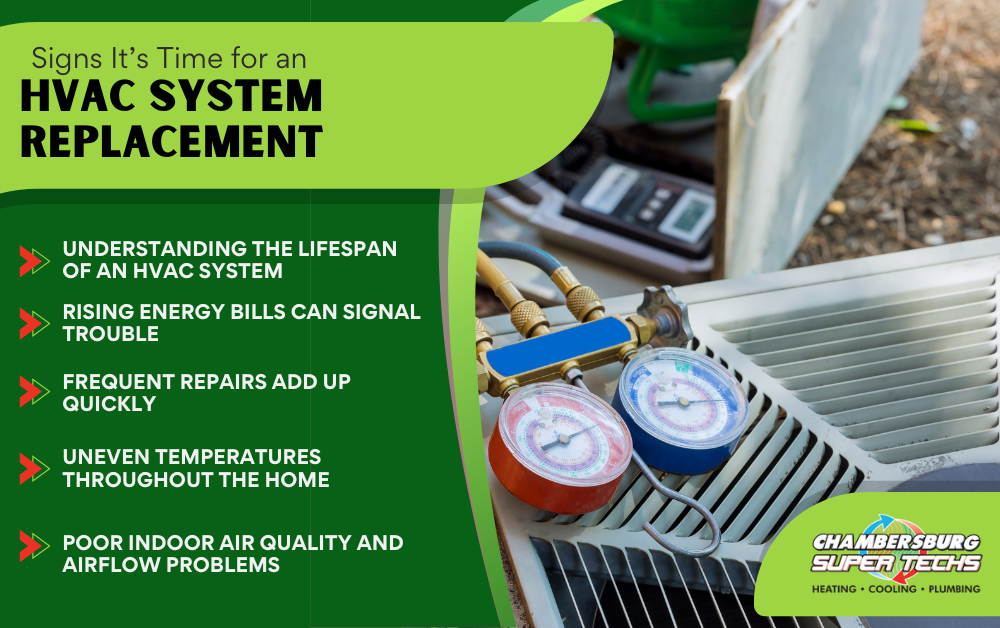
Understanding the Lifespan of an HVAC System
The usual lifespan of HVAC systems falls within a 10 to 20-year range, depending on usage, maintenance history, and installation quality. Furnaces often last slightly longer than central air conditioning units, but all systems experience gradual performance decline as they age. Even with regular maintenance, older systems become less efficient and more prone to breakdowns.
As HVAC equipment ages, components begin wearing out from years of operation. Motors, compressors, electrical connections, and blower systems all experience strain over time. Older systems may also use outdated technology that no longer meets current energy-efficiency standards.
An HVAC system replacement becomes increasingly necessary once repair frequency rises and performance declines. Homeowners should evaluate overall operating costs, comfort issues, and system reliability when determining whether replacement is the best option.
Rising Energy Bills Can Signal Trouble
One of the clearest signs that homeowners may need an HVAC system replacement is a noticeable increase in energy bills. Older systems typically require more energy to maintain the same level of heating and cooling. Worn-out components force the system to work harder and run longer cycles, which increases utility costs over time.
Many homeowners initially blame seasonal weather changes for higher bills, but inefficient HVAC systems are often the underlying cause. Dirty coils, failing compressors, airflow restrictions, and outdated technology can all reduce efficiency significantly.
Modern HVAC systems are developed with state-of-the-art energy-saving features that allow them to operate much more efficiently than older units. Replacing an outdated system can often result in substantial long-term savings on monthly energy expenses while improving overall comfort throughout the home.
Frequent Repairs Add Up Quickly
Occasional HVAC repairs are normal, especially as systems age. However, when repair calls become frequent, homeowners should consider whether continued repairs are truly cost-effective. Constant breakdowns can create frustration, inconvenience, and mounting expenses that eventually outweigh the value of keeping the old system running.
A common rule many homeowners follow is that if repair costs continue increasing year after year, an HVAC system replacement may provide better long-term value. Replacing major components such as compressors, heat exchangers, or blower motors can be expensive, especially on aged systems approaching the end of their lifespan.
Frequent repairs can also indicate that the system is no longer operating reliably. Unexpected failures during extreme temperatures can leave homeowners without heating or cooling when they need it most. Installing a new system improves dependability while reducing the likelihood of emergency service calls.
Uneven Temperatures Throughout the Home
Uneven heating and cooling are common symptoms of aging HVAC systems. Some rooms may feel too warm, while others remain difficult to cool or heat properly. Inconsistent temperatures often occur because older systems struggle to distribute air evenly throughout the home.
Several issues can contribute to uneven airflow, including failing blower motors, clogged ductwork, worn-out components, and declining system capacity. While some airflow problems can be repaired, persistent comfort issues may indicate the need for a complete HVAC system replacement.
Modern HVAC systems provide more consistent temperature control through improved airflow technology and advanced thermostat integration. Variable-speed systems and zoning options can help homeowners maintain balanced comfort levels in every room while improving overall efficiency.
Poor Indoor Air Quality and Airflow Problems
As systems get older, they can adversely affect indoor air quality if they are unable to filter and circulate air properly. Dust buildup, excess humidity, allergens, and stale indoor air often become more noticeable when HVAC equipment loses efficiency.
A failing system may struggle to maintain proper airflow due to clogged components or worn-out motors. Weak airflow not only reduces comfort but also allows contaminants to linger inside the home. Moisture buildup within aging systems may even contribute to mold growth and unpleasant odors.
An HVAC system replacement can significantly improve indoor air quality by providing stronger airflow, better humidity control, and enhanced filtration capabilities. Newer systems are designed to work more effectively with advanced air filters and indoor air quality accessories that help create healthier living environments.
Strange Noises and Unusual Odors
HVAC systems should operate relatively quietly during normal use. While some operational sounds are expected, loud or unusual noises often indicate mechanical problems that should not be ignored. Grinding, banging, squealing, or rattling noises can signal worn components or serious internal damage.
Persistent odors coming from vents may also point to larger system issues. Burning smells, musty odors, or foul air circulation could indicate electrical problems, mold growth, or overheating components inside the HVAC system.
Although some issues can be repaired, recurring noises and odors often become more common as systems age. In many cases, homeowners choose an HVAC system replacement to eliminate ongoing performance problems and restore reliable operation throughout the home.
Benefits of Installing a New HVAC System
One of the biggest advantages of an HVAC system replacement is improved energy efficiency. Modern HVAC systems are built to meet higher efficiency standards, helping homeowners reduce energy consumption while maintaining better comfort levels year-round.
New systems also provide enhanced performance features such as smart thermostat compatibility, variable-speed motors, quieter operation, and improved humidity control. These upgrades help create more comfortable indoor environments while lessening wear and tear on system elements.
Another major benefit is improved reliability. New HVAC systems are less likely to experience breakdowns or unexpected failures, especially during periods of extreme weather. Homeowners attain peace of mind knowing their heating and cooling equipment can operate efficiently when needed most.
Additionally, replacing an outdated system may increase property value. Energy-efficient HVAC upgrades are attractive to potential homebuyers because they reduce future maintenance concerns and utility expenses.
Choosing the Right HVAC System Replacement
Selecting the right system is one of the most important parts of any HVAC system replacement project. Every home has unique heating and cooling requirements based on square footage, insulation levels, climate conditions, and household comfort preferences.
Professional HVAC contractors perform load calculations to determine the correct system size for the home. Installing equipment that is too large or too small can create efficiency issues and reduce system lifespan. Proper sizing ensures balanced airflow, reliable temperature control, and efficient energy use.
Homeowners should also consider energy-efficiency ratings when choosing a replacement system. While high-efficiency systems often cost more upfront, they often provide substantial long-term savings through lower energy bills.
Additional features such as zoning systems, smart thermostats, and indoor air quality upgrades can further improve comfort and system performance. Working with experienced HVAC professionals helps homeowners select the best system for their specific needs and budget.
The Importance of Professional Installation
Even the best HVAC equipment can underperform if it is not installed correctly. Accurate installation plays an imperative role in ensuring system efficiency, reliability, and long-term performance. Incorrect installation can lead to airflow problems, refrigerant issues, uneven temperatures, and premature equipment failure.
During an HVAC system replacement, professional technicians carefully remove old equipment, inspect ductwork, verify airflow requirements, and install the new system according to manufacturer specifications. They also test the system thoroughly to ensure safe and efficient operation.
Professional installation helps homeowners maximize the value of their investment while avoiding costly performance issues later. Choosing experienced HVAC contractors ensures the replacement process is completed properly from start to finish.
Conclusion
Every HVAC system eventually reaches a point where replacement becomes the most practical solution. Rising energy bills, frequent repairs, poor airflow, uneven temperatures, strange noises, and declining indoor air quality are all warning signs that homeowners should not ignore. An HVAC system replacement provides an opportunity to improve energy efficiency, increase comfort, enhance indoor air quality, and reduce the stress of ongoing system problems.
Investing in a modern HVAC system offers long-term benefits that extend beyond heating and cooling performance. New equipment provides better airflow, quieter operation, improved reliability, and lower operating costs throughout the year. By recognizing the signs of an aging system early, homeowners can plan ahead and avoid unexpected breakdowns during extreme weather conditions. A professionally installed HVAC system replacement helps create a more comfortable, efficient, and dependable home environment for years to come.Keep your system efficient—call Chambersburg Super Techs today for professional HVAC care.